
Sex isn’t just about pleasure or reproduction. For many, it’s a quiet form of therapy - a way to release tension, reconnect with the body, or feel seen when words fail. Think of it as a silent language that bypasses logic and speaks straight to the nervous system. When done safely and consensually, sex can lower cortisol, boost oxytocin, and create moments of deep emotional grounding. But this isn’t about romance novels or Hollywood endings. It’s about the real, messy, often unspoken ways sex helps people heal - even when they don’t realize they’re healing.
There are moments when people turn to sex not because they’re in love, but because they’re broken. In cities like Dubai, where social norms tightly regulate public expression of desire, some seek out anonymous encounters as a form of release. prostitution in dubai exists in shadows, not because people want to commodify intimacy, but because they’re starved for touch, connection, or simply a moment without judgment. This isn’t an endorsement. It’s an observation: when systems fail to provide safe emotional outlets, people find alternatives - sometimes dangerous, sometimes desperate, always human.
Sex as a Reset Button for Trauma
People who’ve survived abuse, loss, or chronic stress often feel disconnected from their bodies. Therapy can help, but for some, physical sensation becomes the first step back to themselves. A gentle touch, a shared breath, the rhythm of movement - these can rewire the brain’s fear responses. Studies from the Trauma Center in Boston show that somatic experiences, including consensual sexual activity, can reduce PTSD symptoms more effectively than talk therapy alone in certain cases. Why? Because trauma lives in the body. Healing sometimes needs to start there too.
This doesn’t mean sex cures trauma. It means it can create space for it. A safe, consensual encounter can remind someone they still have agency over their own skin. That’s powerful. And it’s why sex therapy - a legitimate clinical practice - exists. Certified therapists use guided touch, breathing, and mindfulness to help clients rebuild trust in intimacy. It’s not about sex for sex’s sake. It’s about reclaiming control.
The Difference Between Connection and Transaction
There’s a line between sex as healing and sex as escape. One builds self-worth. The other erodes it. When someone pays for sex, they’re not getting therapy - they’re getting a service. And while that service might temporarily soothe loneliness, it rarely heals the root wound. In places like Sharjah, where cultural taboos are even stricter than in Dubai, the demand for call girls in sharjah grows not from lust, but from isolation. The people seeking these encounters often feel invisible in their daily lives. They crave validation, not just physical release.
But here’s the catch: paid encounters can’t replace emotional reciprocity. You can’t heal from feeling unseen by paying someone to pretend they see you. That’s why many who turn to these services later report feeling emptier afterward. The body might relax, but the soul stays hungry.
Why Society Refuses to See Sex as Healing
We’re taught to separate sex from health. It’s either moral or immoral, sacred or sinful. Rarely is it framed as a tool - like sleep, movement, or nutrition. Yet, people use sex to cope with anxiety, depression, grief, and even chronic pain. A 2023 study in the Journal of Sexual Medicine found that individuals who engaged in regular, consensual sexual activity reported better emotional resilience than those who didn’t - even after controlling for relationship status and physical health.
But because we don’t talk about it openly, people suffer in silence. They don’t know that sex can be part of recovery. They don’t know that orgasms trigger endorphins that rival painkillers. They don’t know that mutual eye contact during sex can activate the same brain regions as bonding between a parent and child.
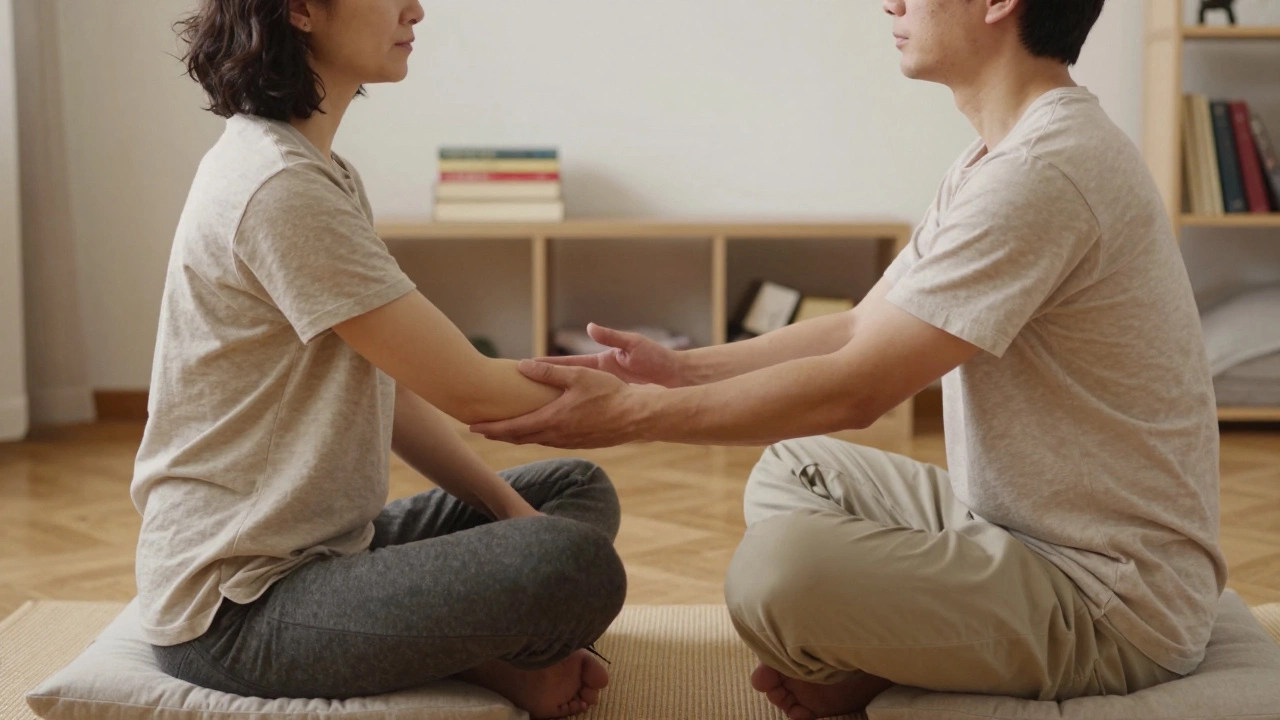
The Role of Consent and Safety
Healing through sex only works when it’s safe. That means clear boundaries, mutual respect, and the freedom to stop at any time. Coercion, pressure, or power imbalances turn what could be therapeutic into something harmful. That’s why the rise of prostitutes in dubai is so troubling - it’s not about healing. It’s about survival. Many who work in this space are trapped by economic need, migration status, or exploitation. Their bodies become a commodity, not a pathway to peace.
True therapeutic sex happens in environments where both parties are free - free to say no, free to be vulnerable, free to leave without consequence. That’s rare in the commercial world. But it’s possible in therapy, in long-term relationships built on trust, or even in solo exploration when someone learns to listen to their own body again.
How to Use Sex Mindfully for Emotional Health
If you’re looking to use sex as a tool for emotional well-being, here’s how to start:
- Check your motivation. Are you seeking connection, or just distraction? If it’s the latter, try a walk, a journal, or a shower instead.
- Focus on sensation, not performance. Notice how your skin feels, how your breath changes, where tension releases. This is mindfulness with another person.
- Communicate before, during, and after. Say what you need. Ask what they need. Silence isn’t intimacy.
- Respect your limits. If something feels off, stop. Healing isn’t about pushing through discomfort - it’s about honoring your boundaries.
- Seek professional support if needed. A certified sex therapist can help you explore intimacy without shame or pressure.
Sex isn’t magic. But it’s not just biology either. It’s a bridge - between people, between mind and body, between pain and peace. When used with awareness, it can be one of the most powerful tools for healing we have.

What Happens When Sex Is the Only Outlet Left
Imagine living in a place where you can’t talk about your feelings. Where your culture tells you to smile, to be strong, to hide your cracks. Now imagine the only way you can feel real - truly, deeply real - is through physical contact with a stranger who doesn’t know your name. That’s not desire. That’s desperation. And it’s happening more than we admit.
People don’t become sex workers because they want to. They become sex workers because the alternatives - poverty, homelessness, abuse, isolation - are worse. The same is true for those who seek them out. The systems that fail them - mental health care, housing, immigration, gender norms - leave gaps. And in those gaps, sex becomes the only language left.
That’s not a moral failure. It’s a societal one.
Healing Doesn’t Require a Partner
You don’t need someone else to heal through sex. Solo exploration - masturbation, body scanning, mindful touch - can be just as powerful. Many therapists now recommend it as part of recovery from trauma or sexual dysfunction. The goal isn’t orgasm. It’s presence. It’s learning to feel safe in your own skin again.
Try this: Lie down. Turn off the lights. Place one hand on your chest, the other on your belly. Breathe slowly. Notice where you feel tightness. Where you feel numb. Don’t try to change it. Just observe. Then, gently touch that area. Not to fix it. Just to say, “I’m here with you.”
That’s sex as therapy. No partner needed. Just you, your breath, and the courage to be still.
Can sex really help with anxiety and depression?
Yes - when it’s consensual and mindful. Sex releases endorphins, oxytocin, and serotonin, which can temporarily reduce anxiety and lift mood. It’s not a replacement for therapy or medication, but for many, regular sexual activity becomes part of their emotional self-care routine. Studies show people who have satisfying sex lives report lower levels of stress and better sleep.
Is sex therapy real, or just a myth?
Sex therapy is a licensed, evidence-based practice. Certified therapists work with individuals and couples to address issues like low desire, pain during sex, trauma-related intimacy problems, and sexual dysfunction. It often includes communication exercises, sensate focus techniques, and education about the body. It’s not about having sex in the office - it’s about rebuilding trust and understanding around intimacy.
Why is sex so stigmatized as a healing tool?
Because we’ve been taught to separate pleasure from health. For centuries, religion, law, and media have framed sex as either sacred or sinful. That binary leaves no room for it to be seen as a tool - like exercise or meditation. But science shows it affects brain chemistry, nervous system regulation, and emotional bonding. The stigma isn’t based on evidence - it’s based on outdated beliefs.
Does masturbating count as therapeutic sex?
Absolutely. Many trauma survivors start healing through solo exploration because it gives them full control. Mindful masturbation - focusing on sensation, breathing, and presence - helps reconnect the mind and body. It’s not about getting off quickly. It’s about learning to feel safe in your own skin again.
Can sex heal emotional loneliness?
Temporary, yes. Lasting, no. A physical encounter can ease loneliness for a moment by triggering oxytocin and reducing cortisol. But real emotional healing comes from being known - not just touched. If you’re using sex to fill a void, it’s worth asking why that void exists and whether deeper connection might be what you really need.
If you’ve ever felt broken and thought sex might help - you’re not alone. And you’re not wrong. The trick is knowing how to use it wisely. Not as an escape. Not as a transaction. But as a quiet, powerful way to come back to yourself.